Wednesday, 15 July 2009
Slow Train Coming
Support by US Episcopalians for homosexual clergy is contrary to Anglican faith and tradition. They are leaving the family
Sunday, 12 July 2009
Deep and Wide: the Poustinia and the Labyrinth

For this reason I kneel before the Father, from whom his whole family in heaven and on earth derives its name. I pray that out of his glorious riches he may strengthen you with power through his Spirit in your inner being, so that Christ may dwell in your hearts through faith. And I pray that you, being rooted and established in love, may have power, together with all the saints, to grasp how wide and long and high and deep is the love of Christ, and to know this love that surpasses knowledge — that you may be filled to the measure of all the fullness of God. (Eph. 3:14- 19)

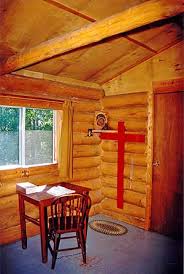
An entry into the desert, a lonely place, a silent place where one can lift the two arms of prayer and penance to God in atonement, intercession, reparation for ones sins and those of ones brothers’

The Poustinik enters his Poustinia and takes humanity with him. He lifts that humanity before God, with all its pains and sorrows, joys everything
He would arise and go into the place ‘where heaven meets earth’ departing without any earthly goods, usually dressed in the normal dress of a pilgrim…. A simple handwoven shirt of linen, down to his ankles.....He took along a linen bag, a loaf of bread, some salt, a gourd of water & a staff

Let your Poustinia be a quiet secret garden enclosed, for it is a hallowed place, a holy place where the soul enters to meet God. It is not a show place to be discussed and shown off’.

‘But the essence of the Poustinia is that it is a place within oneself’

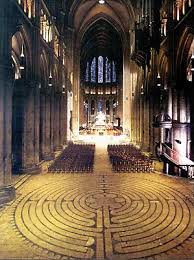
"A beautiful spiritual tool -- a pattern, an emblem, a walkway -- has captured my attention and my heart. The labyrinth is its name."- Jill K. H. Geoffrion

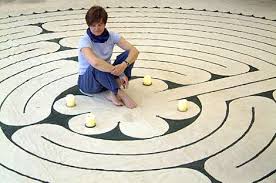
"Why does the Labyrinth attract people? Because it is a tool to guide healing, deepen self-knowledge, and empower creativity. Walking the labyrinth clears the mind and gives insight into the spiritual journey. It urges action. It calms people in the throes of life transitions. It helps them see their lives in the context of a path, a pilgrimage. They realize that they are not human beings on a spiritual path but spiritual beings on a human path. To those of us who fell we have untapped gifts to offer, it stirs the creative fires within us. To others who are in deep sorrow, the walk gives solace and peace. The experience is different for everyone because each of us brings different raw material to the labyrinth. We bring our unique hopes, dreams, history, and longings of the soul."
- Dr. Lauren Artress, Walking a Sacred Path, p. 21

"Walking a Labyrinth is a personal meditative activity and can be understood as a path of contemplation or prayer for people in seeking the Divine or seeking peace without regard to any particular religious tradition."—The Hingham Journal, 9/04

"Programs and practices rife with occult methodologies and techniques have been in the works at churches and youth ministries around the country:Taize, Lectio Divina, The Labyrinth (prayer walk), Renovare, guided imagery, Walk to Emmaus, Cursillo, Centering Prayer, Ignatian Awareness Examen, The Jesus Prayer, and The Spiritual Exercises of St. Ignatius, to name but a handful." Tom McMahon - The Berean Call
"Stand by the roads and look And ask for ancient paths, Where the good way is, And walk it it, and find rest For your souls." - Jeremiah, 6:16

Now to him who is able to do immeasurably more than all we ask or imagine, according to his power that is at work within us, to him be glory in the church and in Christ Jesus throughout all generations, for ever and ever! Amen. (Eph.3:20- 21)
Deeply rooted: profoundly open

We will consider conciliatory, non-confrontational ways of bridge-building and working together without compromising our own beliefs and faith. Bearing in mind any form of engagement with the other necessitates the possibility of change. We will share stories of what works (with examples from around the world) rather than simply look at insurmountable problems.
| Date: | Monday, July 13, 2009 |
| Time: | 7:45pm - 9:45pm |
| Location: | Education Centre, Guildford Cathedral |
| Street: | GU2 7UP |
| City/Town: | Guildford, United Kingdom |
| Phone: | 01483484916 |
| Email: |


| Date: | Wednesday, July 22, 2009 | ||||
| Time: | 7:30pm - 9:30pm | ||||
| Location: | Emmanuel Church | ||||
| Street: | Stoughton GU2 9SJ | ||||
| City/Town: | Guildford, United Kingdom
|
Friday, 10 July 2009
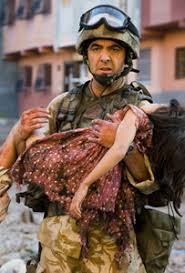
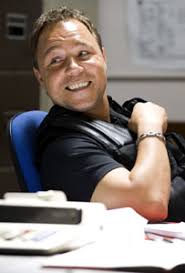
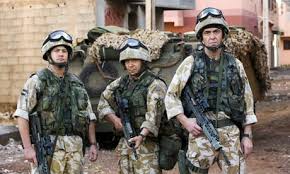
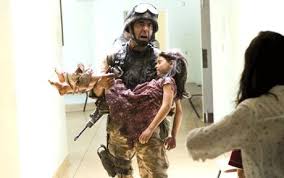
Occupation - drama in Iraq


"Gilgamesh, what you seek you will never find. For when the Gods created man they let death be his lot, eternal life they withheld. Let your every day be full of joy, love the child that holds your hand, let your wife delight in your embrace, for these alone are the concerns of humanity."

Wednesday, 8 July 2009
Codex Sinaiticus online


Codex Sinaiticus, a manuscript of the Christian Bible written in the middle of the fourth century, contains the earliest complete copy of the Christian New Testament. The hand-written text is in Greek. The New Testament appears in the original vernacular language (koine) and the Old Testament in the version, known as the Septuagint, that was adopted by early Greek-speaking Christians. In the Codex, the text of both the Septuagint and the New Testament has been heavily annotated by a series of early correctors. The significance of Codex Sinaiticus for the reconstruction of the Christian Bible's original text, the history of the Bible and the history of Western book-making is immense.

Professor David Parker from the University of Birmingham’s Department of Theology, said: “The transcription includes pages of the Codex which were found in a blocked-off room at the Monaster y of St Catherine in 1975, some of which were in poor condition. This is the first time that they have been published.
“The digital images of the virtual manuscript show the beauty of the original and readers are even able to see the difference in handwriting between the different scribes who copied the text. We have even devised a unique alignment system that allows users to link the images with the transcription. This project has made a wonderful book accessible to a global audience.”
The British Library is running an exhibition form 6 July to 7 September called 'from Parchment to Pixel'
have a look at the online gallery
Tuesday, 7 July 2009
Ethical Guidelines for Christians and Muslims


Ethical Guidelines for Christian and Muslim Witness in Britain
As members of the Christian Muslim Forum we are deeply committed to our own faiths(Christianity and Islam) and wish to bear faithful witness to them. As Christians and Muslims we are committed to working together for the common good. We recognise that both communities actively invite others to share their faith and acknowledge that all faiths have the same right to share their faith with others.
There are diverse attitudes and approaches amongst us which can be controversial and raise questions. This paper is not a theology of Christian evangelism or mission or Da’wah (invitation to Islam), rather it offers guidelines for good practice.
--------
The Christian Muslim Forum offers the following suggestions that, we hope, will equip Christians and Muslims (and others) to share their faith with integrity and compassion forthose they meet.
1) We bear witness to, and proclaim our faith not only through words but through our attitudes, actions and lifestyles.
2) We cannot convert people, only God can do that. In our language and methods we should recognise that people’s choice of faith is primarily a matter between themselves and God.
3) Sharing our faith should never be coercive; this is especially important when working with children, young people and vulnerable adults. Everyone should have the choice to accept or reject the message we proclaim and we will accept people’s choices without resentment.
4) Whilst we might care for people in need or who are facing personal crises, we should neve manipulate these situations in order to gain a convert.
5) An invitation to convert should never be linked with financial, material or other inducements. It should be a decision of the heart and mind alone.
6) We will speak of our faith without demeaning or ridiculing the faiths of others.
7) We will speak clearly and honestly about our faith, even when that is uncomfortable or controversial.
8) We will be honest about our motivations for activities and we will inform people when events will include the sharing of faith.
9) Whilst recognising that either community will naturally rejoice with and support those who have chosen to join them, we will be sensitive to the loss that others may feel.
10) Whilst we may feel hurt when someone we know and love chooses to leave our faith, we will respect their decision and will not force them to stay or harass them afterwards.
Christian Muslim Forum

Thursday, 2 July 2009
Mapping Dialogue: essential tools for social change

- “conference designed as a coffee break’
- ‘Networked conversation modelled on natural communication’
- DISCOVER fun or functional writings and documents on any subject – explore by category, by browsing or just typing in a search topic.
- SHARE your own writings and documents – dust off all that great content on your hard drive or in print. Then check back for comments and analytics on how many people have read or downloaded your doc.
- DISCUSS topics of interest to you - leave comments on other people’s documents, join groups and express yourself.