Showing posts with label Islam. Show all posts

Monday, 9 March 2015

HopeforMuslims - a Wind in the House of Islam

-->
Celebrated Christian author to visit the UK


Dr David Garrison, author of the acclaimed book A Wind in the House of Islam will be taking part in a speaking tour of the UK in June. The ‘Hope for Muslims’ tour aims to be a catalyst for more prayer and more action on reaching out to our Muslim neighbours.

In his book, Dr David Garrison concludes that never in the history of Muslim/Christian interaction have we seen the response to the Gospel we are seeing today.  It is a story of how, in answer to prayer and in response to a religion that is becoming increasingly divided, thousands of Muslims are choosing to become followers of Jesus. Dr Garrison tells us that today, in more than 70 separate locations in 29 nations new movements of Muslim-background followers of Christ are taking place.

Dr Garrison defines a movement to Christ to be at least 100 new churches started or 1,000 baptisms that occur over a 20-year period in one people group. His research involved seeing many of the churches for himself and systematically interviewing more than 1,000 Muslim background believers from the groups he details.

Dr Garrison will speak at venues in Scotland, Northern Ireland, moving down through England, finishing in the London area on 21st June. The tour will end as the 30 Days of Prayer for the Muslim World begins, coinciding as always with the Muslim fast of Ramadan. This prayer movement, which began in 1993, has been one of the keys to the move of God we are seeing. We want to see the wind of God's Spirit continue to blow right across the Muslim world, including right here in the UK.

Dr Garrison’s book, A Wind in the House of Islam will be available for sale during the tour and from selected Christian bookshops around the UK.

Hope for Muslims is an initiative of a wide range of mission agencies of the Global Connections network.
For more information contact:
E: abower@globalconnections.org.uk
T: 01926 487755
W: www.hopeformuslims.org  www.windinthehouse.org  www.30-days.net


Further information

About the author
For nearly 30 years Dr David Garrison has been a missionary pioneer with the Southern Baptist International Mission Board. His faith journey has led him to study a dozen languages and travel through 100 countries.
Dr Garrison currently lives in Colorado with his wife of 35 years, Sonia, and two of their four children, where he serves as the Southern Baptist International Mission Board’s Global Strategist for Evangelical Advance.

About the book
There are nine rooms in the House of Islam. A wind is blowing through every one of them.

A Wind in the House of Islam explores the stories of more than 1,000 Muslim-background followers of Jesus Christ from each of the nine rooms in the House of Islam. Join Dr Garrison in this amazing journey of discovery, tracing the work of the Holy Spirit as He blows through the House of Islam.

Dr Garrison travelled a 250,000 miles into every corner of the Muslim world collecting interviews from more than a thousand former Muslims who have given their lives to Jesus Christ. These Muslim-background believers were interviewed because they were part of larger movements of Muslims to Christ in their communities. He asked them, “What is your story? What did God use to bring you to faith in Jesus Christ?” Along the way, Dr Garrison discovered that we are in the middle of the greatest turning of Muslims to Christ in history. These historic movements are taking place all across the Muslim world, from West Africa to Indonesia.

Book review
A Wind in the House of Islam by David Garrison
This book is inspirational.  It contains all the serious research of an academic treatise, yet is easy reading and faith building. A Wind in the House of Islam tells the remarkable story of God's activity in drawing millions of Muslims to faith in Christ.  This mass movement of the 21st Century (just 12 years!) is set against the historical failure of the church's mission in the previous centuries.  Given that Islam is the last major people group to respond to the Gospel, these stories and events are highly significant. Each of nine major regions of Muslim-dominated countries is examined and while the response to Christ is proportionally higher in some than others, every region is telling the same basic story. Dr Garrison has given us a window into a world many of us knew little about, have been troubled by and have judged by the media's fear-ridden headlines. Behind those headlines we learn that God is powerfully at work!  I commend the book: it will illuminate your understanding, warm your heart, raise your spirits and encourage your prayers.
Reviewed by Andrew Kane - Teaching Pastor, Christ Church Woking

Supporting resource
30 days of Prayer for the Muslim World is a prayer guide for those wishing to pray for Muslims.  The 30 days of prayer coincide with the Muslim fast of Ramadan. 
For further information or to order a prayer guide, please visit www.30-days.net


Saturday, 5 July 2014

#LoveFast Thank God for Taxis

as part of the #Mahabba  #LoveFast Campaign  - #30days of Prayer&ACTION  during #Ramadan - we received the following story from Alan in Aylesbury (NB the names of individuals have been changed) 


When I first moved to Aylesbury five years ago I asked God to show me the key to making friends with Muslim men in the town.  They and their families number about 6,000 or 10% of the population and mainly come from Pakistan. 

God showed me that using taxis would be the key.   As we seldom use taxis I couldn’t see how this would happen.  But about three years ago, after leading a severely disabled man to the Lord in a local residential home, we’ve been taking him to church every Sunday – by taxi! Including loading and unloading the wheel chair and journey time, I reckon we have about 20-30 minutes every week talking with various drivers.     

I discovered that one regular driver, Ahmed, a devout Muslim, had several daughters but only one son in his thirties, who was severely disabled.  I first met Hassan when he was seriously ill in hospital and have since visited him regularly, watching cricket and telling some of the great OT stories. Family members are always present to join the conversation as Hassan needs continuous help.

Hassan recently suffered a stroke which robbed him of his speech.  I cried when I heard that this young man had now become almost completely disabled.  I asked his father if I could pray to Isa-al-Masih for his speech to be recovered and praise God there has been a slight improvement.  I am now a regular visitor to this three-generational family home and am becoming a trusted friend.  I never thought I’d thank God for taxis!    


Thursday, 26 June 2014

#LoveFast during #30days of #Ramadan


I am currently running a social networking campaign called #LoveFast  as part of #Mahabba #30days of prayer&action during #Ramadan
Join us for 30 days of Christian prayer and action during Ramadan (similar to Stewardship’s #40Acts Generosity campaign during Lent). 

This will run alongside the #30Days of Prayer for the Muslim World campaign. http://www.30-days.net/>  

There is a Twitter feed; Facebook page; information on MahabbaonTheCity & MahabbaNetwork website. www.mahabbanetwork.com

And there is an opportunity for you to interact with your blogs, responses,  ideas, pictures, stories. We want you to be able to get involved with prayer and action during the Muslim month of Ramadan….

Come and join us…     


LINKS
Twitter feed @MahabbaNetwork  
Facebook page  MahabbaNetwork https://www.facebook.com/pages/Mahabba-Network-LoveFast/491171160963192 ;
Mahabba Network website https://www.mahabbanetwork.com/
The 4 page leaflet/brochure - full of links to youtube etc to get started - can be downloaded via Drop Box  https://dl.dropboxusercontent.com/u/7993360/%23LoveFast_Final.pdf 


Monday, 9 June 2014

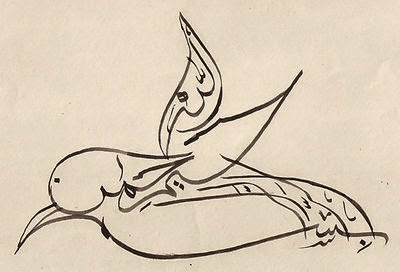
the little bird and the big fire


I attended an interfaith meeting at Willow Grange - the Bishop of Guildford's residence. Only about a dozen of us. We were thinking about how we remain faithful in such troubled time ... with so many stories of conflict around the world, and so much pressure on interfaith relations in Britain


Dr Naqvi, the Imam of the Shia Mosque in Woking,  told a story about a little bird that tried to put out a fire with a  drop of water.  It became a metaphor of the small efforts we make on the local level to try and change the global picture. In the face of some many difficulties and so many negative stories, how do we maintain hope ?  by contributing our little drops in an ocean. As Mother Theresa once responded:  The Ocean is made of many drops ...... 


I later looked up the story of the little bird on the internet and found this version: 

Once there was a little bird (Ababeel) that lived during the times of Prophet Abraham (Hazrat Ibrahim AS). When Prophet Abraham (pbuh) was thrown into fire by the enemy of faith, King Nimrod, a little bird saw what happen and decide to put out the fire to help Prophet Abraham (pbuh). The little bird starts scooping up few drops of water in her tiny beak from the nearby river. The larger birds in the vicinity watched and laughed at the little bird and they said, "Where are you carrying the water?"
The little bird said, "To put out the fire around Prophet Abraham (pbuh)." The larger birds continue laughing. "How could you put out such a huge fire with such a small amount of water? It is pointless and useless."
Do you know what the little bird replied? "I am sure Allah (SWT) will not asked me whether I manage to put out the fire or not. But Allah (SWT) will ask what I have done to stop the fire."
Hearing the answer, all the larger birds are silenced.

We often think that our effort is the one responsible for our success. This is wrong way of thinking because Allah (SWT) is the One. If he says we succeeded, we will succeed. Our effort is just a sacrifice that we are willing to make. Similarly little bird knows that with few drops of water, fire will not extinguished but it is his responsibility to contribute whatever it can in anyway with his capability.


Monday, 25 November 2013

Friendship First visit Shah Jehan Mosque

Here are a couple of pictures I took from my Instagram Photos of the Across group of  'Friendship First' course students visiting the Shah Jehan mosque in Woking (Oriental Road)  on Saturday 23rd November.    I am always appreciative of their hospitality and welcome...... 


1 Visit of #Across #frienshipfirst course to Shah Jehan Mosque #Woking

  
2 With the Imam @ Shah Jehan Mosque #Across #frienshipfirst visit

Monday, 14 January 2013

Christian Muslim Solidarty

When I saw this, I immediately tweeted it on to my 'followers' but then felt I needed to add it to the blog which seems to make it a little more permanent. You can find it on YouTube: 


#MyJihad: This Video Will Renew Your Faith in Humanity 

It is about an Imam Mazhar Shaheen from Omar Makram Mosque in Cairo and his visit to Qasr-el-Dubara Church in Cairo to bring Christmas Greetings. He did his doctorate at the famous Azhar University in Cairo, in Q'ranic Rhetoric. it shows........ 

I found it an astonishing statement of solidarity, discovered though working closely together. It gave me a real sense of hope..........     I hope you find it inspirational as well. 


Wednesday, 30 November 2011

Dual Belonging ?


The picture is a oil pastel painting I did based on a picture I saw in Bangkok, Thailand of a common religious image – a Buddha figure sitting under a Banyan tree in the traditional Lotus position. It made me think whether Christ would be portrayed in that culture in such a way - Jesus the Enlightened One.   

I have been attending a consultation at  Pilgrim House  in Korea on Global Network of  Centers of World Mission (GNCWM 2011)   

A colleague of mine presented a paper. He is currently working on a doctorate on the concept of dual belonging -  the idea of following Jesus from within another religious system. 
This has been well established among the Peoples of the Book  -  Messianic Believers who are Jewish and follow the Messiah,  and Muslim followers of Jesus – Muslim Background Believers (MBBs ) and the idea of Insider Movements.  

But my colleague is from Malaysia and from a Buddhist background.  His brother is a Buddhist ‘priest’. It is part of who he is.  And religion and culture are difficult to seperate, socially politically, legally.  How does he as a Christ follower continue contact with his family and their culture?

Taking it further - Is it possible to be a Disciple from within another religious system?  He writes:  
The last frontier for Christian mission in the 21st century is the meeting between religions, and the most important task for Christian mission, I would like to propose is not the challenge of contextualisation but the challenge of in-religionisation.  Evangelicals must, “ask not only for ‘inculturation’ but ‘inreligionization’, i.e. not only Chinese Buddhism or Indian Christianity, but also Hindu Christianity”[1] (David Bosch, Transforming Mission)
Beyond the debates of insider movements, “inreligionisation” will be attempts by Christians coming from Asian religious traditions to "believe that it is possible and even necessary not only to accept in theory certain doctrines or practices of other religions and to incorporate them, perhaps in modified form, into Christianity, but also to adopt and live in their personal lives the beliefs, moral rules, rituals, and monastic practices of religious traditions other than Christianity [1]  

How can a person remain true to their own culture and discover afresh the Global Christ -  Jesus ‘the man for all men’  without necessarily converting to Western forms of Christianity. 

It’s a fascinating concept and has raised eyebrows in some parts of the world. How is it possible to belong to two religious systems at the same time?  Some would differentiate between faith and religion, and suggest that  a true faith relationship with Jesus is possible within a religious system other than Christianity. They would say it is possible to believe and be a disciple and follower of Jesus without having to convert to the whole package.  And retain some of the key cultural-religious identity. 
It is I know contentious.  

A strong missional principle is contextualisation - the gospel needs to be interpreted from within the lens of another culture, but the line between contextualisation and syncretism is a thin one and depends on what position you are arguing from. 

There is a sense where most of us carry more than one label:
No one today is purely one thing. Labels like Indian, or woman, or Muslim, or American are not more than starting-points, which if followed into actual experience for only a moment are quickly left behind. Imperialism consolidated the mixture of cultures and identities on a global scale. But its worst and most paradoxical gift was to allow people to believe that they were only, mainly, exclusively, white, or Black, or Western, or Oriental. . . . No one can deny the persisting continuities of long traditions, sustained habitations, national languages, and cultural geographies, but there seems no reason except fear and prejudice to keep insisting on their separation and distinctiveness, as if that was all human life was about. Survival in fact is about the connections between things; in Eliot’s phrase, reality cannot be deprived of the ‘other echoes [that] inhabit the garden .[3] (Edward Said, in Culture and Imperialism)
 This suggests that it is not simply an 'either-or' issue, and that it may be possible to carry more than one label at once; 'both-and' 

As a Hindu, Ram Gidoomal discovered Christ,  as the "Sanatana Satguru" - the eternal and true guru.  Now as a Christ follower, he describes what Jesus achieved in Hindu terms:  “Jesus is the bodhisattva who fulfilled his dharma to pay for my karma to negate samsara and achieve nirvana!” 


[1] David Bosch, Transforming Mission, Maryknoll: Orbis Books, 1991:477-478.
[2] Peter Phan, Being Religious Interreligiously: Asian Perspectives on Interfaith Dialogue (Maryknoll, NY: Orbis Books, 2004, 61
[3] Edward Said, in Culture and Imperialism (New York: Alfred Knopf, 1994), p. 336

Thursday, 7 April 2011

Shaken, not stirred

A personal reflection on the UN killings in Afghanistan


"Diatribe never gets anywhere"


(Painting: © Phil Simpson/CMS)


This article is from the CMS website
The painting is an oil pastel I did, based on the photo used, which was taken by Simon in Korea


I followed the events in Afghanistan with shock and horror. The brutal murders in Mazar-e-Sherif and then protests in Kandahar and Jelalabad – all in response to a fundamentalist pastor in Florida and the ‘trial and execution’ of the Qur'an.

The image of the burning Qur'an inflamed minds all around the Muslim world.

It struck me that the Bible could similarly be tried and found wanting, because it is how the text is interpreted and (mis)used that is the real issue.

Unfortunately, careful debate of our sacred texts is not a factor in these situations. What concerns me is the typical pattern of people in the mosque on a Friday being stirred up by the preaching to retaliate.

What may start as a peaceful protest so easily escalates and gets out of control (and the same dynamic happens in London when students take to the streets to protest against tuition fees) until you have a frenzied crowd seeking revenge. That appears to be what happened in Mazar.

What is needed but so sadly lacking in Afghanistan is interfaith dialogue – even more than the usual condemnation of such provocative acts as the Florida Qur'an burning. The trouble with such condemnation is that it provokes an equal and opposite response. And leads to escalation.

Diatribe it seems to me never gets anywhere.

CMS is involved with partner organisations in Afghanistan and has been for many years. There are team members working there in various humanitarian roles. I have visited many times over the past 15 years and seen their excellent work.

One of our people based in Mazar-e-Sherif wrote shortly after the crowd stormed the UN compound and killed staff there:
“We are ok. Shaken up but ok. Gunfire all afternoon off and on. We are staying inside and just waiting to see what will happen. Really devastating that so many UN workers were killed in such a terrible way, so brutally…. It changes how you view people. I am sick of all this senseless killing. The building was our side of town, some people one street away had bullets land in their garden. We will probably just keep a low profile for a few days while the facts of what happened comes out.”
That’s the problem with senseless killing – it makes you sick, tired and weary and can erode your commitment. 'Compassion fatigue' can apply to workers as well as donors.

Like the apostle Paul, we are at a loss to understand but not despairing (2 Cor 4:8–9). Shaken by events but not stirred up to participate in the cycle of revenge.

The challenge is to ‘hope against hope’ and to just keep going.

Friday, 16 July 2010

Imams and Clergy

Archbishop Rowan is so good at interfaith dialogue:


"You can only understand each other when you see the other's face turned towards God. Then and only then, can you turn to each other with expectation, patience and charity."

Portrait of Archbishop Rowan Williams by Victoria Russell


I was attending an 'Imams and Clergy' meeting where you come as a matching pair. It was run by the Chritstian-Muslim Forum - "creating spaces for Christians and Muslims to meet, learn about and understand each other"

It was hosted by the Archbishop at Lambeth Palace. With key addresses from ++ Rowan Williams, Imam Sheik Raza of Mosques and Imams National Advisory Board (MINAB), Mark Fisher of Churches Together England CTE and a flying visit from the Government Minister Andrew Stunnel, Parliamentary Under Secretary of State for Communities and Local Government (responsible for race equality, community cohesion (including the future of PREVENT), building regulations, housing and regeneration, and the implementation of the Big Society)

He emphasised the continued emphasis on social cohesion, an interfaith week in November and a Faiths in Action scheme (with grants available for £6000) currently there are 113 projects running around the country.

The over 50 participants all contrinuted in smaller groups to a discussion about how to use a statement being issued by the C-M Forum in support of local encounter covering areas like : live up to the best ; speaking generously of the other faith ; developing friendships meet each other ; work together locally (the full text will be available later and I will publish it on this blog)

The Christian Muslim Forum have also written a helpful booklet 'Local Christian-Muslim Friendship: building relationships between mosques and churches' - available as a pdf download here

Friday, 8 January 2010

The name of Allah


A friend John T has sent me the following in response to the whole 'Allah' debate

So where did the name Allah come from? Prior to the rise of Islam and for some time afterwards, Aramaic was widely used among Jews and Christians in the Ancient Near East and many Aramaic words were borrowed into Arabic. The usual term for God in Aramaic was Alâh(â). It is the term that Jesus would have used. It is used as the term for God in the books of Ezra and Daniel, in the Jewish translations of the Bible (the Targums), in the Talmud and in the Aramaic Bible used by many Middle-Eastern Christians today. When Judaism spread across Arabia, it brought many Aramaic names and terms, including Alâh(â). When Christianity followed, the Christians used Aramaic Scripture and liturgy in most of Arabia and Mesopotamia. As a result the Arabic-speaking Jews and Christians introduced many Aramaic words and names into Arabic. In a research paper entitled “Who was ‘Allah’ before Islam?”, I present evidence from pre-Islamic inscriptions and manuscripts to show that Arabic-speaking Jews and Christians were using Allah as the name of God in the centuries prior to the rise of Islam.
(This is being published by William Carey Library in Rethinking our Assumptions About Muslims.
A prepublication version is available.
It should be noted that Muslim scholars do not like to admit that the Arabic of the Qur’an has loanwords, and they suggest that the name Allah is derived from the expression al ’ilah, meaning “the God,” with the article of uniqueness. The word ’ilah is related to the Biblical Hebrew words ’eloh and ’elohim, meaning “God,” as well as to the Biblical Aramaic words elâh and alâhâ, so regardless of the derivation, the word is related to the Biblical terms for God. The prophet of Islam claimed to preach a continuation of the message of the Jewish prophets and the Messiah Jesus, so it stands to reason that he would use the same names that Arabic-speaking Jews and Christians were using. Evidence for this is found in the Qur’an itself. For example, it cites the claim of Christians that Jesus is Allah. This claim is rejected in the Qur’an, which says, “In blasphemy indeed are those that say that Allah is Christ the son of Mary” (Sura 5:17, Yusuf Ali translation). The very next verse in the Qur’an criticizes Jews and Christians for claiming that they are “sons of Allah” (Sura 5:18). So in addition to other historical evidence for the pre-Islamic use of Allah by Christians, the Qur’an itself reflects a situation in which Christians were already using Allah as the name of God.

click for the source

Rising Tensions in Malaysia


Tensions are rising in Malaysia particularly in KL when 4 churches were attacked as a protest. The controversy stems from a ban on a Catholic newspaper, The Herald, using the word 'Allah' in its Malay-language edition. The Kuala Lumpur High Court struck down the three-year old ban on non-Muslims using of the word 'Allah'.
Whilst the main Islamic Polictical party, PAS, agrees with the ruling, there are others who do not, including one main Islamic Youth movement, Abim.
As the article points out Christians in the middle East have been using the word ‘Allah’ for God for centuries - before the coming of Islam in fact.


Inivitably as well as the official and more formal communications through the media, the world of social networking comes into its own at times like this....

Some of my Facebook friends are from Malaysia. So they and other Twitterers have been pointing to articles and making comments through their updates:

Church & Christians showed dignity, restraint, compassion. Contrast with t/ arsonists & protestors. Such excellent PR.

Eddie in his Kouya Chronicle explores some of these complexities from a translators perspective in his article 'what's in a name'

But I'll let the Bishop of West Malaysia Moon H. Ng have the last word
KL situation is not too good. Three churches are torched. One more not sure how bad. Cars with Christian stickers are smashed. ...... We are meeting the PM to talk. Pray for peace and harmony. It is a sad episode.

Pray we will and pray we must .....

Friday, 14 August 2009

'Yom-e-Azadi' - Pakistan's Independence Day


Azadi - independence - is not a destination, it is a journey. It is not something that we ‘achieved’ on August 14, 1947. It is something that we must earn, and preserve, every day.

On this particular Yom e Azadi, there can be no better reminder of just what the continuing journey that is Azadi really mean than the daily struggles of internally displaced Pakistanis (IDPs). Those who remain homeless in their own homeland.

from Pakistaniat ('All things Pakistani') article  'Azadi: Its a journey not a destination'


RECENT KILLINGS

Its also an opportunity to think about Gojra and the recent killings there 

Christians were killed in Gojra on 1st August as a result of riots following a wedding in Koriyan (30 July)  where confetti was thrown over the newly married couple.   Local muslims allege that the confetti was made from a shredded Koran.  

The following day a mob (of c 800) went on the rampage  torching houses.   Initially it was reported that 7 had died and at least 20 were injured   (see Barnabas Fund report

Last week at the Sacred Heart Catholic Church Gojra  the funeral was held for the 7 catholic victims (all from the one 'Hamid' family). An addition 3 members of the Church of Pakistan were also killed 

pakistan_0809

A Christian couple sit in front of their home in Gojra, destroyed in the anti-Christian violence


EQUAL CITIZENS 

Mohammad Ali Jinnah, 'Quaid-e-Azam',  the Father of the Nation, famously said :


'Islam and its idealism have taught us democracy. It has taught equality of man, justice and fairplay to everybody. We are the inheritors of these glorious traditions and are fully alive to our responsibilities and obligations as framers of the future constitution of Pakistan. In any case Pakistan is not going to be a theocratic State to be ruled by priests with a divine mission. We have many non-Muslims --Hindus, Christians, and Parsis --but they are all Pakistanis. They will enjoy the same rights and privileges as any other citizens and will play their rightful part in the affairs of Pakistan.'   
Broadcast talk to the people of the United States of America on Pakistan recorded February, 1948.

PAKISTAN ZINDABAD

Happy Independence Day to ALL the citizen's of Pakistan - of whatever of faith - Muslim, Christian, Hindu, Sikhs, Parsees   and from whichever 'tribe' of Pakistan  -  Punjabi, Pushtoon, Sindhi, Balouch, Mohajar.  


Thursday, 13 August 2009

'Do you see the missionary dog?' Istanbul, Aug 3rd


"In a bizarre show of Turkish nationalism, a young Muslim here took a Christian Turk at knife point, draped his head with the national flag and threatened to slit the throat of the “missionary dog” in broad daylight earlier this week." (Compass Direct News Service)
 
You can read the Full story here:  

The experience obviously had a big effect on the Christian Turk, Aydin, who said: 

“On Aug. 3 I died and was reborn,” said Aydin. “That was my date of death and birth. I was sure I was going to die. It’s like a new opportunity, a new life. I really think the Lord gave me a second chance, because if you think of it, after other events, like Hrant Dink or the Malatya killings, those brothers weren’t so fortunate, right?”


Sunday, 12 July 2009

Deeply rooted: profoundly open

Details of 2 events coming soon in Guildford. A workshop I am running on 'Common Ground' as part of the Diocesan Summer School and a talk at Emmanuel Stoughton as part of a reconcilliation Tour by 2 colleagues Tanas and Joseph 

COMMON GROUND


How far are we prepared to go in terms of engaging with Muslims and people of other faiths, dealing with and working on common social issues. 
We will consider conciliatory, non-confrontational ways of bridge-building and working together without compromising our own beliefs and faith. Bearing in mind any form of engagement with the other necessitates the possibility of change. We will share stories of what works (with examples from around the world) rather than simply look at insurmountable problems.


Date:
Monday, July 13, 2009
Time:
7:45pm - 9:45pm
Location:
Education Centre, Guildford Cathedral
Street:
GU2 7UP
City/Town:
Guildford, United Kingdom
Phone:
01483484916
Email:

TOUR OF RECONCILLIATION 

Two different men, two different backgrounds. One road of reconcilliation. One message of Hope.  What happens when 2 men who should be enemies meet the Prince of Peace? Jospeh Steinberg a Jewish believer and Tanas Alqassis a Palestinian Christian share how God brought each of them to himself and made them brothers in Christ. 


Date:
Wednesday, July 22, 2009
Time:
7:30pm - 9:30pm
Location:
Emmanuel Church
Street:
Stoughton GU2 9SJ
City/Town:
Guildford, United Kingdom
Phone:
01483823416
Email:

Tuesday, 7 July 2009

Ethical Guidelines for Christians and Muslims

Christian Muslim ForumChristian Muslim Forum
In a previous Blog I mentioned I was attending the launch of a statement on ethical evangelism
The remarkable thing about it is it has been written by Muslims and Christians together 

Christian Muslim Forum; Logo
The Christian Muslim Forum launched the statement on 24th June in the offices of Islamic Relief in Waterloo. You can read more about the event  and the Statement itself is downloadable


Ethical Guidelines for Christian and Muslim Witness in Britain

As members of the Christian Muslim Forum we are deeply committed to our own faiths(Christianity and Islam) and wish to bear faithful witness to them. As Christians and Muslims we are committed to working together for the common good. We recognise that both communities actively invite others to share their faith and acknowledge that all faiths have the same right to share their faith with others.

There are diverse attitudes and approaches amongst us which can be controversial and raise questions. This paper is not a theology of Christian evangelism or mission or Da’wah (invitation to Islam), rather it offers guidelines for good practice.

--------

The Christian Muslim Forum offers the following suggestions that, we hope, will equip Christians and Muslims (and others) to share their faith with integrity and compassion forthose they meet.

1) We bear witness to, and proclaim our faith not only through words but through our attitudes, actions and lifestyles.

2) We cannot convert people, only God can do that. In our language and methods we should recognise that people’s choice of faith is primarily a matter between themselves and God.

3) Sharing our faith should never be coercive; this is especially important when working with children, young people and vulnerable adults. Everyone should have the choice to accept or reject the message we proclaim and we will accept people’s choices without resentment.

4) Whilst we might care for people in need or who are facing personal crises, we should neve manipulate these situations in order to gain a convert.

5) An invitation to convert should never be linked with financial, material or other inducements. It should be a decision of the heart and mind alone.

6) We will speak of our faith without demeaning or ridiculing the faiths of others.

7) We will speak clearly and honestly about our faith, even when that is uncomfortable or controversial.

8) We will be honest about our motivations for activities and we will inform people when events will include the sharing of faith.

9) Whilst recognising that either community will naturally rejoice with and support those who have chosen to join them, we will be sensitive to the loss that others may feel.

10) Whilst we may feel hurt when someone we know and love chooses to leave our faith, we will respect their decision and will not force them to stay or harass them afterwards.

Christian Muslim Forum